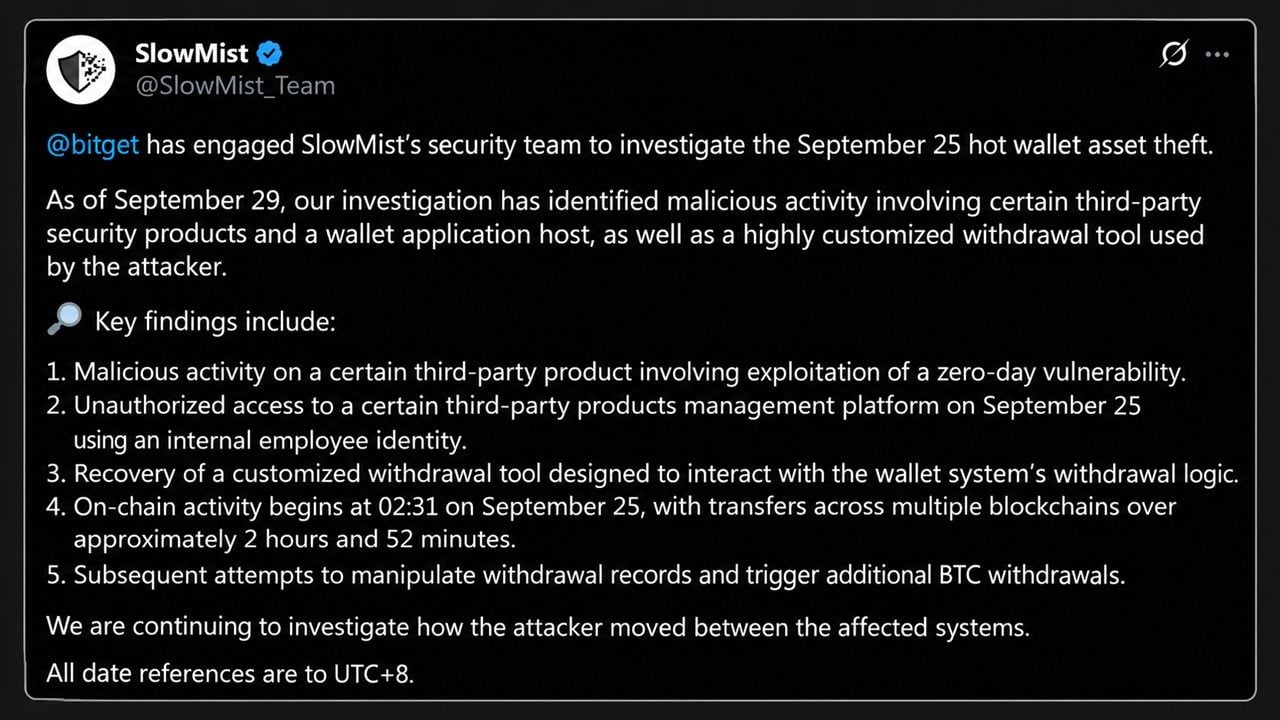
Blockchain investigator ZachXBT identified that wallets associated with the recent Bitget security breach moved about $3.9 million in Zcash (ZEC) into Ironwood, the cryptocurrency’s newest shielded payment system. This transfer occurred on Wednesday morning, involving 2,746 ZEC across three transactions between 08:15 and 08:46 UTC. The funds originated from an intermediary address funded by a wallet Bitget previously identified as belonging to the attacker, which had received nearly 18,917 ZEC during the September 24 incident.
The movement into the shielded pool obscures sender, recipient, and transaction amounts, making it difficult for investigators to follow the trail within the network. While entry points remain visible, Zcash does not expose a direct link between deposits and subsequent withdrawals. These transfers represent roughly 15% of the stolen ZEC. Other proceeds have been traced through public swap services like THORChain, where ether-to-bitcoin exchanges left a transparent record of incoming and outgoing assets.
This development highlights the persistent challenge privacy-focused cryptocurrencies pose to post-hack asset recovery. By moving funds into Zcash’s shielded pool, attackers leverage cryptographic obfuscation to break the visible chain of custody, forcing investigators to rely on metadata such as timing and amount correlations rather than direct transactional links. This tactic effectively slows down law enforcement and exchange compliance teams attempting to freeze or recover stolen assets, demonstrating how specific blockchain features can be weaponized against transparency mechanisms.
From a market structure perspective, this incident underscores the tension between financial privacy and regulatory compliance. While Zcash offers legitimate utility for confidential payments, its use in criminal contexts raises questions about how exchanges and regulators will handle privacy coins in the future. Stakeholders should watch for potential policy responses aimed at restricting shielded transactions or mandating enhanced tracking capabilities for privacy-preserving protocols, as well as continued efforts by investigators to de-anonymize these movements through off-chain intelligence.