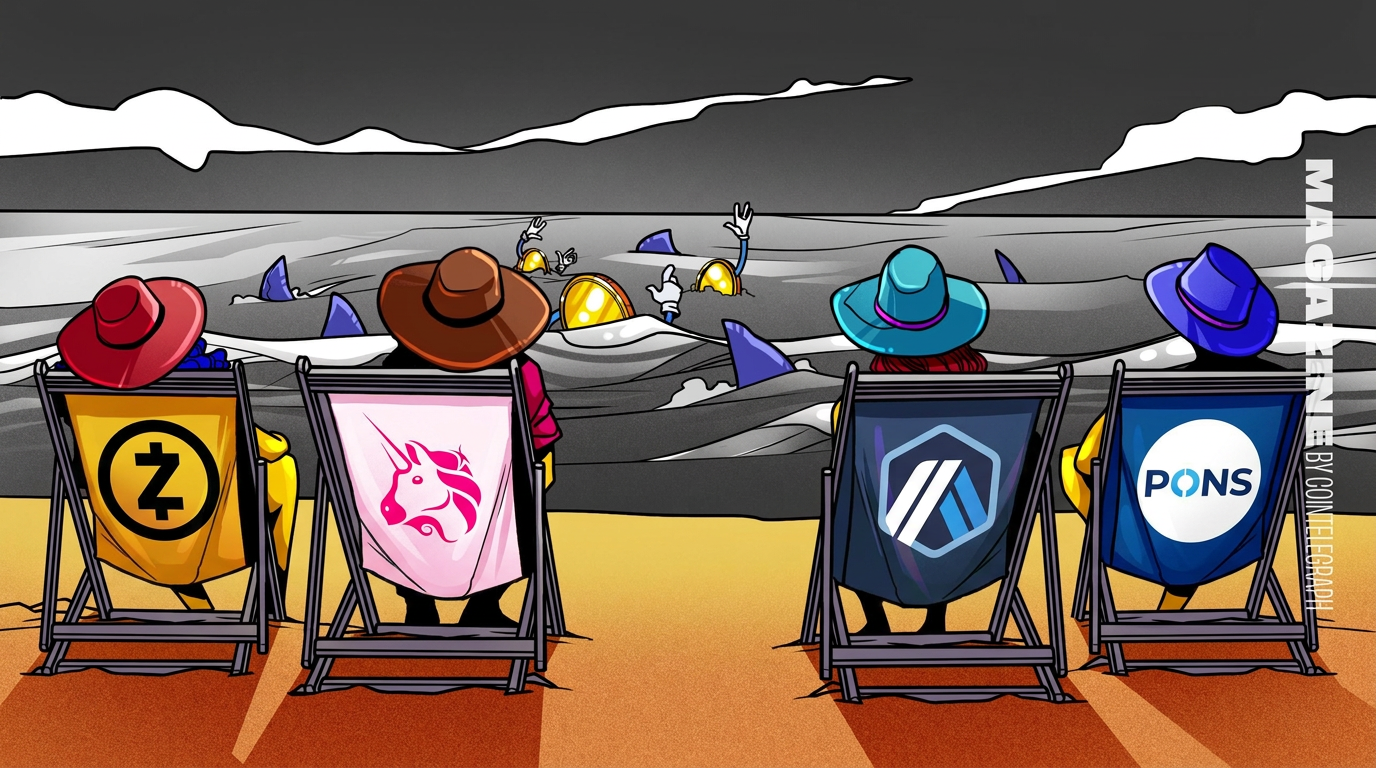
A new report from analytics firm Glassnode and crypto exchange Bybit highlights a stark divergence between Bitcoin and the broader cryptocurrency market. Over the past two years, Bitcoin increased by 28%, whereas the median mid-cap altcoin declined by 74%. Ethereum, the second-largest asset, remained roughly flat during this period. This performance gap marks a significant departure from the historical "altseason" pattern, where capital typically rotates from Bitcoin into smaller tokens as a rally matures. Instead, gains have concentrated heavily at the top of the market hierarchy.
The data indicates that leverage has accumulated disproportionately in riskier assets. Bitcoin futures open interest represents approximately 2% of its market capitalization, compared to nearly 24% for speculative tokens like PEPE. Institutional flows further reinforce this concentration, with spot Bitcoin ETFs recording about $55.2 billion in cumulative net inflows versus $13.1 billion for Ethereum funds. Solana’s newer spot ETFs have attracted roughly $29.7 million. Although recent price action saw Bitcoin surge above $80,000 following dovish Federal Reserve forecasts, dragging total crypto market capitalization up 4.6% to $2.85 trillion, the structural dominance of Bitcoin remains evident in both price performance and institutional demand.
The sustained outperformance of Bitcoin relative to mid-cap altcoins suggests a fundamental shift in market structure, moving away from broad-based rallies toward asset-specific valuation. The reversal of the traditional altseason rotation implies that investors are increasingly treating Bitcoin as a distinct macro-asset rather than merely a gateway to higher-risk tokens. This dynamic is reinforced by the extreme disparity in leverage distribution, where speculative excess is isolated in low-market-cap assets while Bitcoin maintains a conservative open-interest-to-market-cap ratio. Such concentration reduces systemic contagion risk from minor token collapses but also limits the breadth of bull markets, potentially making future rallies more fragile if they rely solely on Bitcoin's momentum.
Institutional adoption metrics provide a clear signal of where long-term capital is settling. The massive gap between Bitcoin ETF inflows and those for Ethereum or Solana indicates that regulatory clarity and liquidity depth are driving allocation decisions more than technological narratives. For market participants, the key implication is that diversification within crypto may no longer offer the same risk-adjusted returns it once did, as the correlation between Bitcoin and altcoins weakens during drawdowns. Monitoring whether this bifurcation persists through different monetary policy cycles will be critical, as it determines whether the market is maturing into a tiered system or simply experiencing a temporary flight to quality.