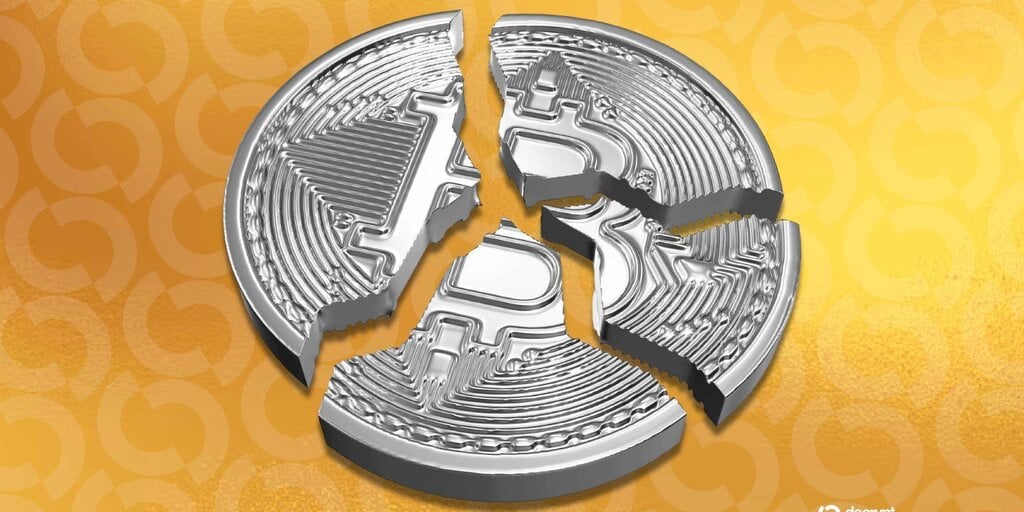
Ahead of Bitcoin Amsterdam, scheduled for November 4–6, 2026, the Bitcoin Museum & Art Gallery (BMAG) will present works by European artists ZETRA, RYR, and Cypherpunk Now. The exhibition explores the cultural roots of bitcoin and the evolving meaning of money, continuing a tradition of financial critique that dates back to Amsterdam’s 1720 satirical response to speculative bubbles. The featured artists utilize diverse mediums, from graffiti and political printmaking to hacker culture, to examine the tension between bitcoin’s grassroots origins and its increasing institutional adoption.
ZETRA, who discovered bitcoin in 2017, employs visual art to chart economic shifts. His TOMATOSOUP series reinterprets Andy Warhol’s Campbell’s Soup Cans to illustrate changing prices in dollars versus bitcoin, while THE BIP39 SERIES transforms the 2,048 words used in wallet recovery phrases into physical artworks. RYR approaches money as a narrative system built on collective belief, using shredded banknotes to create paper and pigment, and crafting concrete grenades filled with cash to symbolize artifacts from a future where fiat conflicts have ended. Martin Fischer, working under the name Cypherpunk Now since 2020, documents bitcoin’s cultural evolution through screenprints. Fischer was part of the Prague collective Ztohoven and helped establish Paralelní Polis in 2014, a hackerspace café that accepted only bitcoin.
The artists reflect on how bitcoin’s integration into traditional finance has altered its community dynamics. Fischer notes that while early days were defined by a lack of speculation and a focus on uncensorable money, current debates often center on technical disputes like Ordinals and BIPs rather than shared anti-establishment goals. Despite this shift, the artists maintain that their work preserves the spirit of a movement that was cultural long before it became institutionalized.
This exhibition highlights a critical juncture in bitcoin’s maturation: the friction between its ideological origins as a counter-cultural monetary alternative and its reality as an institutionalized asset class. By showcasing artists who physically manipulate currency or document community schisms, BMAG underscores that bitcoin’s value proposition remains deeply tied to its narrative and cultural identity, not just its financial metrics. The artists’ skepticism regarding corporate absorption suggests that the 'trustless' nature of the technology does not automatically translate to a trustless social fabric, as community cohesion fractures over technical governance and commercialization.
From a Market Structure perspective, the persistence of such artistic critiques indicates that a significant segment of the user base still views bitcoin through a lens of monetary sovereignty rather than pure investment yield. This cultural resistance may influence long-term adoption patterns, particularly among users who prioritize self-custody and privacy over convenience offered by centralized exchanges. As regulatory frameworks tighten and ETFs normalize bitcoin holdings, the visibility of these dissenting voices serves as a reminder that the protocol’s foundational ethos continues to generate distinct subcultures that operate independently of mainstream financial institutions.