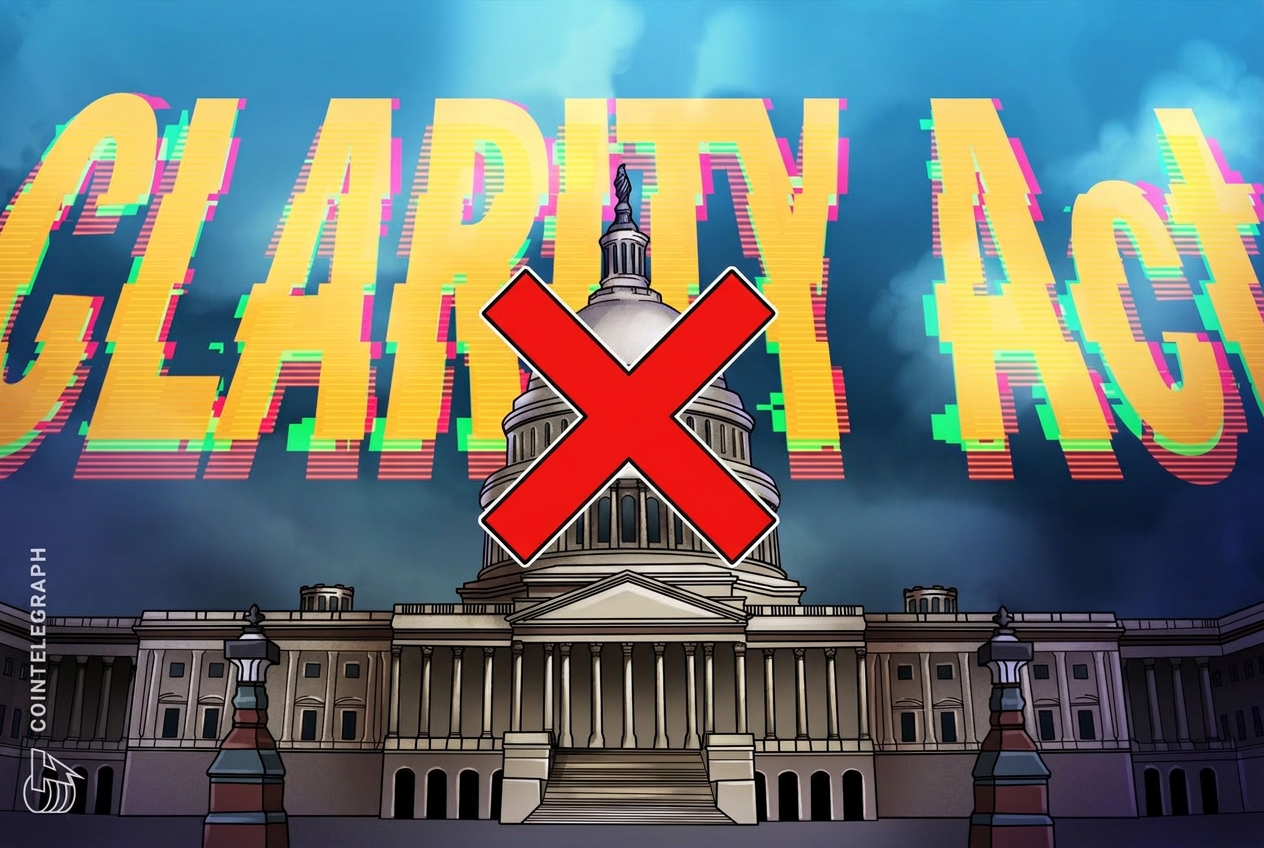
Lawmakers blocked the Clarity Act on Tuesday via a procedural vote, with the legislation failing to secure the 60 votes needed to advance. The bill received 49 votes in favor and 50 against, marking a significant setback for the digital asset industry which had long advocated for this measure. President Donald Trump had urged lawmakers to pass the bill last month, while Republicans accused Democrats of deliberately stalling its progress.
The Clarity Act aims to formally divide oversight between regulators by distinguishing which digital assets are securities, commodities, or stablecoins. Democratic Senator Elizabeth Warren opposed the bill, arguing it posed a massive risk to families and could lead to a crypto-fuelled economic crash. Critics also cited concerns over potential conflicts of interest involving the Trump family’s ventures, such as the $TRUMP memecoin and World Liberty Financial. Although revised drafts included ethics titles barring officials from profiting from digital assets, the bill remains stalled after passing the House last year.
The failure to advance the Clarity Act underscores the deep partisan and ethical divides hindering comprehensive crypto regulation in the United States. By blocking the procedural motion, the Senate has effectively halted the legislative effort to clarify jurisdictional boundaries between the SEC and CFTC for the remainder of the current session. This outcome leaves the market structure in a state of regulatory ambiguity, where existing enforcement actions continue without the statutory clarity that industry participants sought to reduce compliance uncertainty and foster institutional adoption.
From an operational risk perspective, the continued absence of a unified regulatory framework may deter traditional financial institutions from fully integrating digital assets into their custody and trading infrastructure. While regulators proceed with rulemaking efforts, the lack of congressional consensus signals that major legislative breakthroughs remain unlikely in the near term. Market participants should monitor whether executive branch initiatives or state-level actions can partially fill the regulatory void, though these measures often lack the uniformity required for broad-scale institutional confidence.