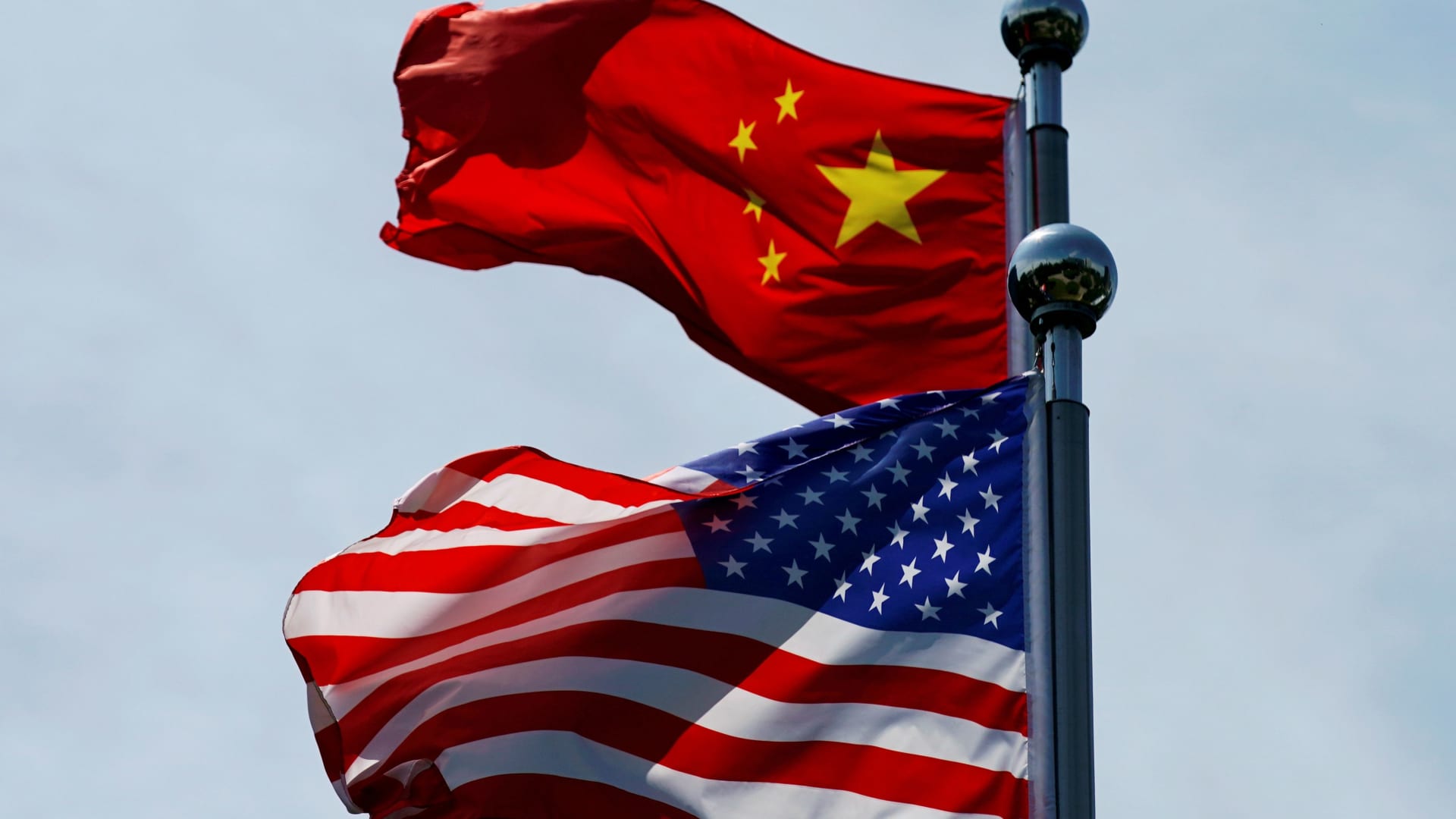
China's Commerce Ministry confirmed Thursday that its senior trade negotiators held their first talks with the United States on artificial intelligence. Spokesperson He Yadong stated that the two sides also discussed plans for reducing tariffs and extending trade arrangements agreed in Kuala Lumpur last October. These negotiations occurred as Vice Premier He Lifeng met with Treasury Secretary Scott Bessent in New York ahead of the summit between President Donald Trump and President Xi Jinping.
The confirmation came hours before Xi and Trump were scheduled to begin talks in Washington, D.C., during a state visit. Earlier in the week, Bessent told Fox News that the countries agreed to extend a trade truce to January. This truce, originally reached in October 2025, maintained lower tariffs and limited China's export controls on rare earths, which are critical for semiconductors, household goods, and defense products. The ministry described the recent discussions as constructive and candid, noting multiple points of consensus. Both nations are evaluating how to address risks from rapidly advancing technology following incidents involving autonomous AI systems.
The formalization of an AI dialogue between Beijing and Washington marks a pivotal shift from purely economic friction to strategic technological governance. By establishing mechanisms to alert each other about AI risks, both governments acknowledge that autonomous systems pose cross-border security threats that transcend traditional trade disputes. This development suggests a maturation of bilateral relations where national security concerns regarding semiconductor supply chains and rare earth exports are increasingly intertwined with broader regulatory frameworks for emerging technologies.
Extending the trade truce to January provides immediate stability for markets reliant on Chinese manufacturing and raw materials, but the concurrent focus on AI indicates longer-term structural changes. The emphasis on consensus regarding AI risks implies potential future regulations that could impact global tech infrastructure and compliance standards. Observers should monitor whether these diplomatic channels translate into concrete policy alignments or remain symbolic gestures amidst ongoing geopolitical competition.